Should Footballers Have to Dive to Win a Penalty? The Isak Incident Raises Bigger Questions About VAR
Isak stayed on his feet after a clear shirt pull, but Liverpool got no penalty. Should players start diving to win decisions, and is it time managers were given VAR challenges?

Alexander Isak had his shirt pulled in the penalty area; the referee missed it, and VAR didn’t either. Liverpool were left furious, Andoni Iraola questioned what more his striker was supposed to do, and even Arsenal legend Ian Wright felt it should have been a penalty.
It also brings the diving debate back into focus. If a player has to go down to convince officials that a foul has taken place, what message does that send? And with VAR still struggling to correct decisions that look obvious on a replay, should managers be given a limited number of challenges to demand a second look?
Isak's shirt pull: How did VAR miss it?
Liverpool's defeat to Arsenal at Anfield was already a frustrating afternoon for Andoni Iraola's side. Kai Havertz's first-half goal separated the teams, but the biggest talking point came when Alexander Isak attempted to reach a cross from Bradley Barcola.
Jurrien Timber clearly held the Liverpool striker's shirt, pulling him back just as he tried to get his head to the ball. Isak stayed on his feet and made little effort to appeal. Referee Andy Madley allowed play to continue, and VAR official Stuart Attwell did not recommend a review.

The replays opened a live grenade on social media. Timber's shirt pull was visible, and it stopped Isak from reaching the cross. A tug definitely halted some of the momentum Isak carried on the header, but to the surprise of even neutrals, the refs never noticed, even with the “VAR technology” in place.
Jamie Carragher was particularly unimpressed. He questioned why one of the league's leading goalscorers should have to make a meal of being pulled back to get a penalty. Ian Wright agreed, saying Isak should not have to exaggerate the contact and that he would not have questioned a penalty had one been awarded.
Iraola was even more direct after the game. He called it a clear penalty and suggested that if Isak had gone to ground, the officials would have pointed to the spot. Asked whether he would tell his players to do that in future, the Liverpool manager said yes.
It was a sarcastic response, but the frustration behind it was understandable. The laws of the game are not particularly complicated here. Holding an opponent is a direct-free-kick offence, and if it happens inside the penalty area, it can result in a penalty. The important question is whether the holding actually impedes the opponent.
Timber's pull clearly affected Isak's ability to reach the ball. VAR exists to catch precisely these incidents when the referee misses them. Yet the technology was available, the replay was there, and the decision remained unchanged.
Liverpool lost 1-0. We cannot say a penalty would have changed the result, but it would have given them a real chance to get back into the game. At this level, such small or, in this case, bigger, incidents have consequences for big teams fighting for either the title or a European spot.
Are players right to dive to win decisions?
For years, diving and play-acting have been among football's biggest frustrations. A familiar argument has been that foreign players brought a culture of simulation into the Premier League, damaging the game's traditional physical edge.
The accusation has often been lazy, but the wider concern about players exaggerating contact to win free kicks and penalties is legitimate.
This season, there has been a welcome effort to let games flow. Officials have been encouraged to look beyond every minor collision, and players going down under minimal contact are increasingly being asked to get back up and continue. Nobody wants football to become a game of constant stoppages, with every brush of a shoulder resulting in a free kick.
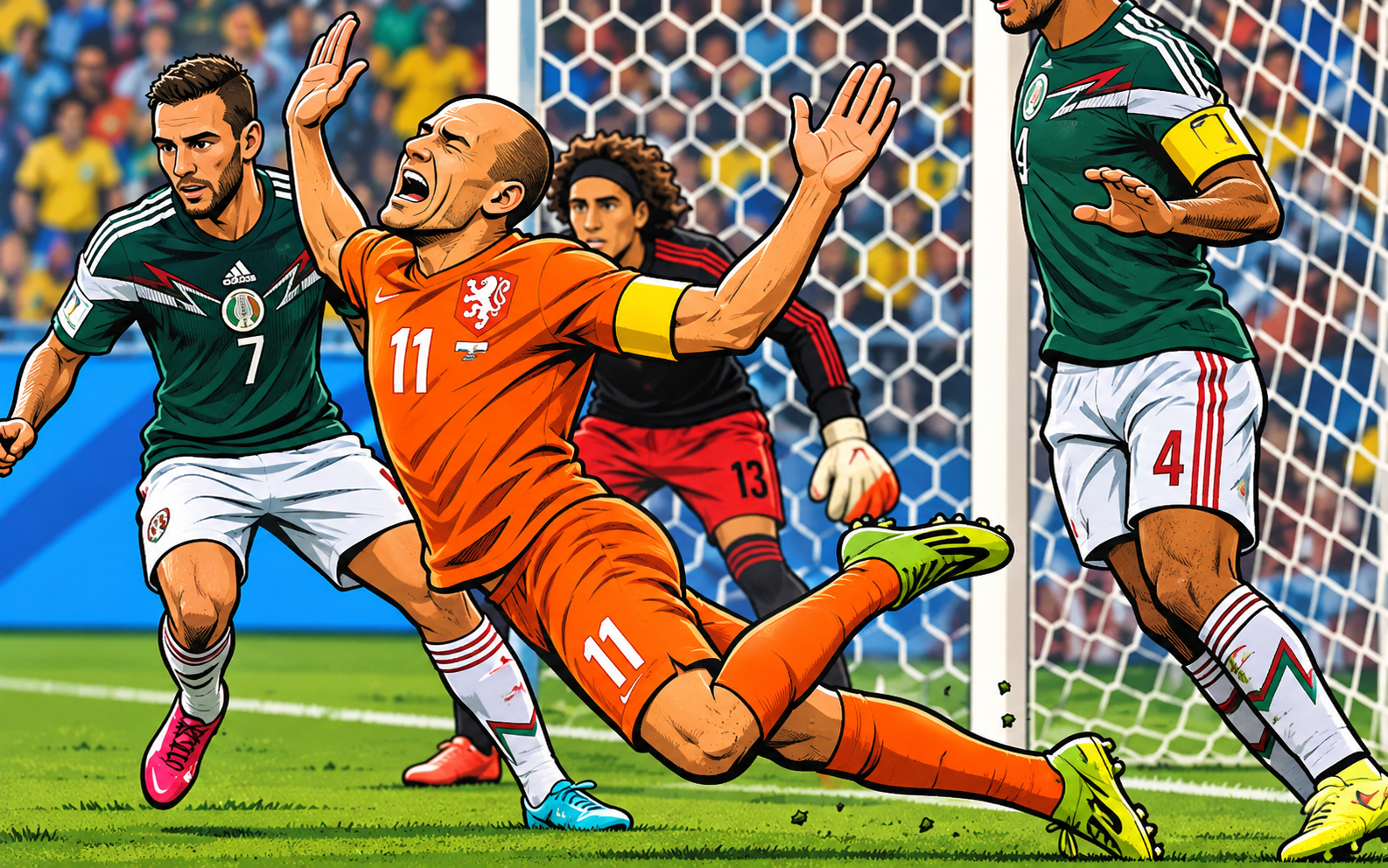
But where does that approach leave an incident like Isak's?
There is a difference between falling over under minimal contact and being prevented from playing the ball by an opponent holding your shirt. One is an attempt to win a decision through exaggeration. The other is an actual infringement that affects a player's ability to compete.
The danger is that officials begin treating both situations in the same way. If a player stays upright after being fouled, that should not count against him. Isak was trying to reach the ball. He didn't need to throw himself to the ground to prove Timber had pulled him back.
That is not an argument for awarding a penalty every time a shirt is touched. Officials must consider the duration of the hold, its impact on the player's movement and whether it actually prevents him from reaching the ball. But when the contact is clear and has an obvious effect, it should be punished.
Football cannot spend years telling players to stay on their feet and then leave them without a decision when they do exactly that. If the lesson from Isak's incident is that players need to dive to get noticed, the game has taken a step backwards.
Should managers get VAR challenges?
The Isak decision AGAIN raises a question about how VAR is being used. The technology was introduced to reduce major refereeing errors, particularly in goals, penalties and red-card decisions. Yet years into its use, we still debate incidents that seem straightforward from several camera angles.
Part of the problem is the intervention threshold. VAR is supposed to correct clear and obvious errors, not re-referee every decision.
But it also leaves room for interpretation. What one official considers a clear and obvious error might be insufficient grounds for another to overturn the original decision. The technology can provide more angles and slow the footage down, but it cannot remove human judgement from the process.
So why not give managers a limited number of challenges?
The idea is simple. Each team could be given one challenge per match to request a review of a specific incident. It could apply to a penalty decision, a possible foul in the build-up to a goal, a red-card incident or another major call within VAR's existing remit.
The manager would have to use it carefully. Get the challenge right, and the team could retain it, or at least be rewarded with a corrected decision. Get it wrong, and the opportunity would be gone. The Premier League could begin with one challenge per side and assess whether it improves the process.
There are obvious drawbacks. Managers could use challenges tactically to disrupt an opponent's momentum or pressure the officials. It could also create more stoppages, particularly late in games. And it would not eliminate bad decisions: the same VAR team would still review the footage.
There is also a question of whether a manager should be able to challenge something the VAR team has already checked. In Isak's case, that's exactly the point. The incident was within VAR's remit, but the officials found no clear and obvious error. A challenge could force a more formal second look, although it would not automatically guarantee a different outcome.
The challenge system would need strict limits. It should not become a way to question every throw-in, corner or minor foul. Nor should managers be allowed to demand a review simply because they disagree with a subjective decision. But for major incidents that could change a match, giving teams a limited opportunity to ask for another look is worth considering.
VAR needs to give football better answers
VAR was supposed to make football fairer. It has corrected plenty of mistakes, and dismissing its value would be unfair. But the frustration is that some of the most obvious incidents still leave supporters asking what the technology is actually doing.
Players should not have to fall over to make a foul look convincing, defenders should not be rewarded for holding opponents, and VAR should not become an exercise in finding reasons to defend the original decision.
A manager's challenge system may not be the answer, but it is a proposal worth discussing. If football is serious about reducing refereeing errors, it should be open to giving teams a say when a major decision has been missed.
Isak did what players are constantly told to do. He stayed on his feet and tried to play the ball. Liverpool got nothing from it. If that is the lesson players take from this incident, football has a bigger problem than one missed penalty.
For the latest football articles, transfer stories, and fan mood, visit Fanscanr.
Track 24/7 Supporter Sentiment Across Every Premier League Club
Explore Fan Mood Index (FMI), Delusion Score, Terrace Banter, and AI match predictions updated round-the-clock from real supporters.


