From Rooney to Messi: When Football’s Wonderkids Lost Their Heads
From Rooney and Messi to Harvey Elliott and Ravel Morrison, football's teenage prodigies have had their fair share of moments of madness. Max Dowman's red card is the latest reminder that even the brightest young talents can get it wrong.

Max Dowman will have to wait a little longer before he can put his Fleetwood nightmare behind him. The FA rejected Arsenal’s appeal against his red card, meaning the 16-year-old will serve a three-match ban after being sent off during the League Cup defeat.
He kicked out at Fleetwood’s Harrison Neal after a scissor challenge, and the suspension rules him out of Arsenal’s league games against Liverpool, Hull and Newcastle. It was a frustrating end to an evening that had already gone horribly wrong for Arsenal.
Dowman is hardly the first teenage footballer to make headlines for the wrong reasons. Some of the game's biggest names have had their own moments of madness before becoming household names.
From needless red cards to social media blunders and off-pitch trouble, here are a few wonderkids who lost their heads before they even reached their twenties.
Wayne Rooney: A red card at 17
Wayne Rooney was already one of English football's most talked-about teenagers when he was sent off for Everton against Birmingham City on Boxing Day 2002. At just 17, Rooney had been on the pitch for barely 15 minutes after coming on as a substitute when he caught Steve Vickers with a reckless challenge.
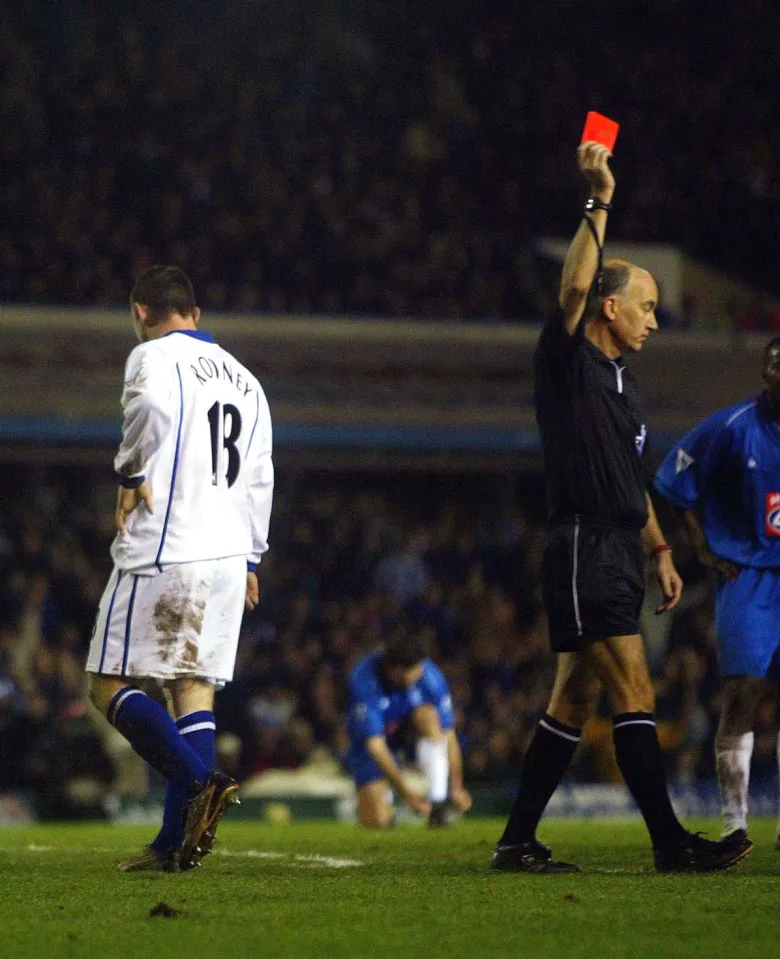
The tackle left Vickers unable to continue with a badly gashed ankle, and Rooney became the youngest player to be sent off in a Premier League match. He was 17 years and 63 days old, and he remains the only player in Premier League history to receive a red card before his 18th birthday.
It was a needless act of aggression from a player already attracting enormous attention.
Rooney would go on to become one of England’s and Manchester United’s greatest players, but his temperament was often part of the package. The Birmingham dismissal was an early reminder that his competitive fire could sometimes get the better of him.
Lionel Messi: A debut to forget
Lionel Messi’s international career could hardly have started more bizarrely. In August 2005, a month after winning the Under-20 World Cup, the 18-year-old made his senior Argentina debut as a second-half substitute against Hungary. Less than a minute later, he was walking back down the tunnel.

Hungarian defender Vilmos Vanczák grabbed Messi by the shirt as he tried to get away. The teenager swung his elbow, caught Vanczák in the neck, and referee Markus Merk showed him a straight red card, a decision many felt was harsh given how easily the defender went down. His first appearance for Argentina had lasted just 47 seconds, but Argentina still went on to win the friendly 2-1.
Messi did not exactly have the best start, but he certainly made up for it.
Cesc Fàbregas: Losing his cool against Everton
Cesc Fàbregas was another teenager who had already become a key figure at Arsenal when his temper got the better of him. In a 1-0 defeat at Everton in January 2006, the 18-year-old midfielder grabbed Tim Cahill by the throat in stoppage time after Cahill shoved him in the face during a flare-up involving Thierry Henry.
Cahill was booked, but the referee had little choice but to send Fàbregas off. It was his first red card, and it came at the end of an afternoon when Arsenal had never found their rhythm.
For a player known for his intelligence and composure on the ball, it was an unnecessarily harsh way to end a frustrating afternoon. Fàbregas would later captain Arsenal and become one of his generation's finest midfielders.
Harvey Elliott: One Snapchat video too many
Not every teenage mistake happens on a football pitch. Harvey Elliott found out in 2019 when a Snapchat video he posted during the Champions League final came back to haunt him.
The 16-year-old, still at Fulham when he posted it, was filmed using offensive language to mock Harry Kane. The video circulated widely, and by the time the FA acted, he had joined Liverpool. He admitted breaching FA rules and received a 14-day suspension from domestic football, a £350 fine, and an order to attend an educational course.

The FA considered the language particularly serious because it referenced disability. Elliott apologised, but the incident was an early lesson in how quickly a moment of foolishness on social media can become a professional problem.
Ravel Morrison: A talent Ferguson couldn’t keep out of trouble
Few Manchester United academy graduates were praised as highly as Ravel Morrison. Sir Alex Ferguson considered him an extraordinary talent, and there were genuine expectations that he could become a first-team star.
But Morrison’s off-field behaviour repeatedly overshadowed his ability. In 2011, aged 18, he was fined £600 after admitting criminal damage for throwing his girlfriend’s phone out of a window. That came on top of a 12-month referral order for witness intimidation, and the court warned that a custodial sentence could follow if he offended again.
It was a serious situation, far removed from the sort of on-pitch frustration that earns a teenager a red card. Ferguson and United had a remarkable footballer on their hands, but talent alone could not solve the problems surrounding him.
Morrison left Old Trafford for West Ham in January 2012 without ever fulfilling the potential that made him such an exciting prospect. Ferguson told Sam Allardyce that he needed to leave Manchester and start a new life, and Morrison’s career became a cautionary tale about what can happen when ability is not matched by the right decisions away from football. Sigh!
Nile Ranger: A promising career derailed
Nile Ranger’s story is another reminder that footballing potential does not automatically translate into a successful career. The former Newcastle striker was a highly rated youngster, but his problems away from the pitch began long before he became a first-team regular.
As a teenager on Southampton’s books, Ranger served time in a young offenders’ institution for his part in an armed street robbery. Newcastle still gave him an opportunity, and he went on to make Premier League appearances for the club.

But further disciplinary issues and off-field problems followed him throughout his career, and in 2017 he was jailed for eight months after admitting conspiracy to defraud. Ranger later spoke openly about his mistakes and how they cost him opportunities in football.
Unlike Rooney and Messi, whose early disciplinary incidents became little more than footnotes in extraordinary careers, Ranger struggled to get his career back on track. His story is a much less comfortable example of what can happen when a young footballer repeatedly makes the wrong choices.
Growing up in the spotlight
There is a difference between a teenager making a mistake and a teenager developing a pattern of behaviour that threatens his career. Rooney, Messi and Fàbregas all had moments they would rather forget, but they learned from them and went on to achieve extraordinary things. Morrison and Ranger show how much harder it can be to recover when the problems extend beyond the pitch.
Dowman is only 16, and Arsenal have a special talent on their hands. He needs to learn from this, keep his emotions in check, and let his football do the talking. The game has seen plenty of teenage prodigies make mistakes. Dowman has his career ahead of him, and plenty of time to get it right.
Track 24/7 Supporter Sentiment Across Every Premier League Club
Explore Fan Mood Index (FMI), Delusion Score, Terrace Banter, and AI match predictions updated round-the-clock from real supporters.


