Farewell to the Maestro: The Moments That Shaped Messi's Argentina
Lionel Messi leaves Argentina after 21 years, 208 appearances, 126 goals, a World Cup, two Copa América titles and a career packed with the lowest of lows and the highest of highs. Here are the defining moments that shaped his extraordinary journey with the national team.

Lionel Messi played his final match for Argentina on Tuesday night at the Monumental, closing a 21-year international career that began with ridicule, survived years of heartbreak and eventually ended with the World Cup in his hands.

For most of two decades, the question hanging over Messi was whether he'd ever drag his country over the line the way Maradona once did alone.
Here are the moments, good and bad, that finally led to Messi winning the World Cup.
The Teenager Who Announced Himself in Holland, 2005
Two months before his senior Argentina debut, an 18-year-old Messi scored twice in the final of the Under-20 World Cup against Nigeria, dragging a golden generation to the trophy almost single-handedly.
It was the first real glimpse of what was coming: a teenager who looked physically unremarkable but processed the game faster than anyone on the pitch. Argentina had unearthed its next great hope, and the Maradona comparisons started before Messi had even kicked a ball for the senior side.
Humiliation in Venezuela, 2007
Two years later came the first real gut check. Argentina reached the Copa América final as favourites and Brazil took them apart 3-0, a result that exposed a young Messi still learning how to carry a team.
It was an early lesson in the gap between individual brilliance and collective substance, a gap that would define most of the next decade and a half of his international career.
So Close in Brazil, So Far From the Trophy, 2014
Messi's first World Cup final arrived in 2014, and Argentina lost it 1-0 to Germany in extra time on Mario Götze's goal. He won the tournament's Golden Ball as best player regardless, an award that felt more like a consolation prize than a celebration, and the image of Messi walking past the World Cup trophy without so much as a glance became the defining photograph of his pre-2022 career.

He was, by now, officially the best player never to win the biggest prize in the sport, and everyone knew it, including him.
Two Finals, Two Losses, One Walkout, 2015 and 2016
The wound worsened before it improved. Argentina lost back-to-back Copa América finals to Chile on penalties in 2015 and again in the 2016 Centenario edition, with Messi missing his own spot kick in the second shootout.

He announced his international retirement on the spot, visibly broken by a third straight final defeat, and it took months of public pressure from fans and teammates to talk him back into the shirt. For a brief period, it genuinely looked like Messi's Argentina story might end in exactly this kind of quiet, bitter surrender.
Rock Bottom in Kazan, 2018
He came back, and it got worse again. He was stuck in a torrid, toxic theme.
A chaotic, dysfunctional campaign under Jorge Sampaoli ended in the round of 16 against France, a breathless 4-3 defeat in which a teenage Kylian Mbappé announced himself as Messi's heir apparent while Argentina's veteran core looked a generation behind.

It was arguably the low point of his international career, a tournament that raised serious questions about whether Messi would ever again play meaningful football for his country, let alone win anything with it.
THE APPOINTMENT, 2018
Out of that wreckage came the single most important structural decision of the entire story.
Argentina handed the job to Lionel Scaloni, a 40-year-old with no senior managerial experience who'd been working as an assistant coach, and the appointment didn't look inspirational or exciting at first.
Scaloni immediately did something nobody before him had managed: he stopped building the team entirely around accommodating one genius and instead built a genuine collective around him, young, hungry, and organised defensively in a way Argentina simply hadn't been for a decade.
Sent Off and Speaking Out, 2019
The lows, though, kept coming for Leo Messi.
Argentina lost in the semifinals of the 2019 Copa América to host nation Brazil, and Messi was sent off for the first time in his international career in the third-place match, furious at what he called systemic favouritism toward the hosts from CONMEBOL.
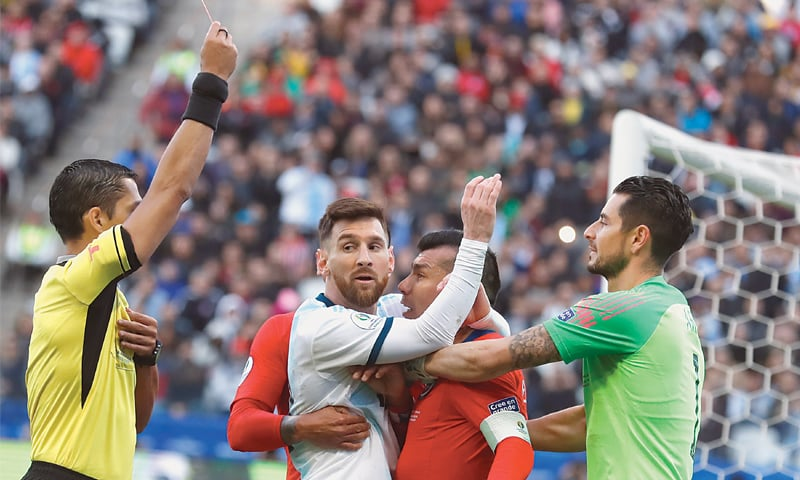
He skipped the medal ceremony entirely and later called the tournament "a World Cup for Brazil," an outburst that cost him a suspension but revealed something new: a player willing to fight publicly for his team rather than simply absorb another disappointment in silence.
Finally, Paying Off the Debt, the Maracanã, 2021
Two years of Scaloni's masterful rebuilding paid off in the most symbolically loaded venue imaginable.
Argentina beat Brazil 1-0 in the Maracanã to win the 2021 Copa América, ending a 28-year trophy drought for the national team and finally giving Messi a senior title with the senior squad.

When the final whistle went, Messi collapsed. Then he cried. Then he lifted the trophy. After everything that had been said about him, after four lost finals and one brief retirement, Argentina finally had a senior international trophy with Messi's name on it.
Lifting the Holy Grail, Qatar, 2022
Everything before this had been building to one tournament, and Messi delivered it in full.
Messi scored seven goals, won the Golden Ball and produced one of the greatest World Cup final performances ever seen. Argentina led France, lost the lead, led again, lost it again, and somehow Messi was still standing there when the penalties finally arrived.
He lifted the World Cup at last. The argument was over.
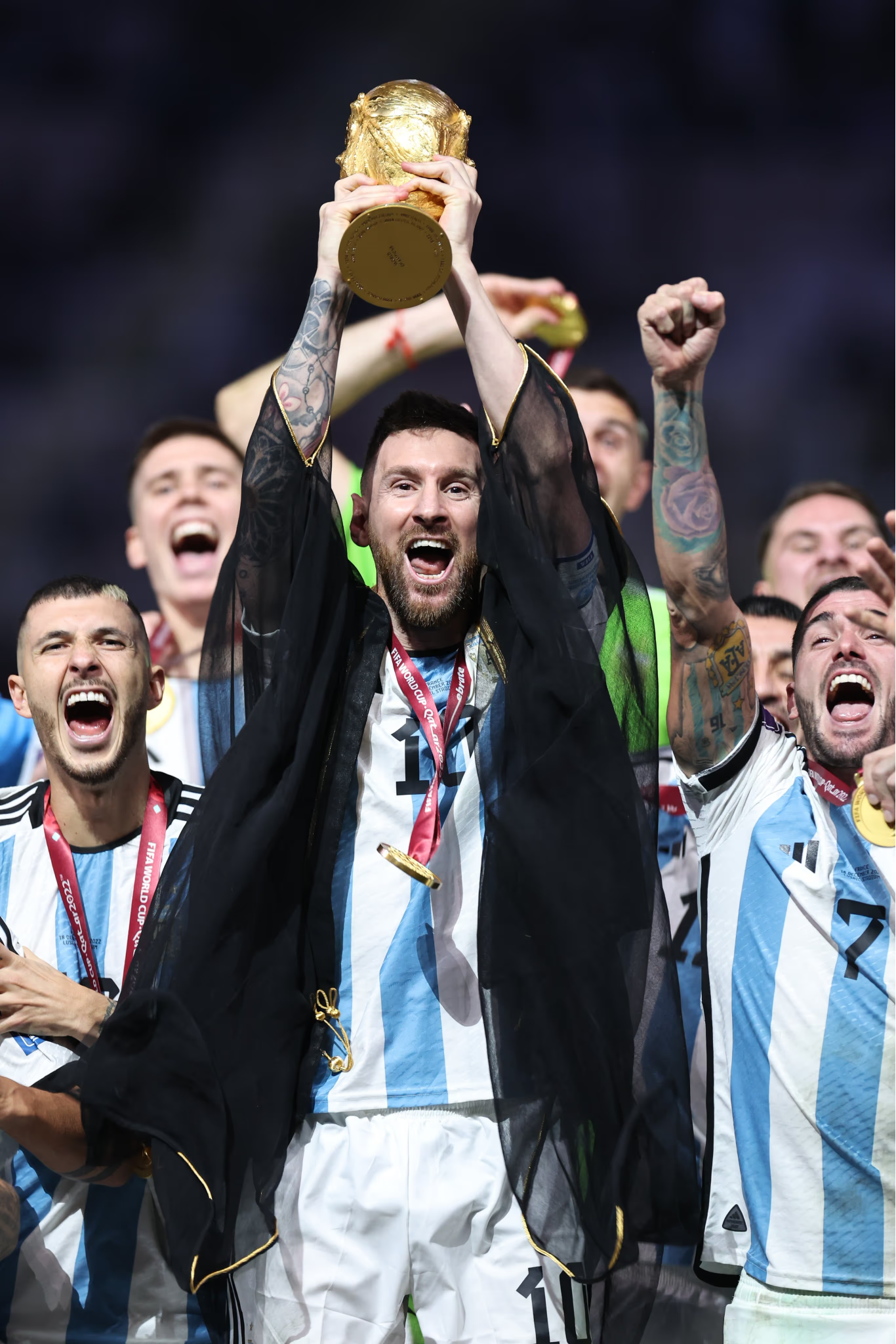
Messi won his second Golden Ball, this one meaning everything the first hadn't, and the photograph of him finally lifting the World Cup, wrapped in a bisht, erased two decades of heartbreak in a single frame.
The Last Dance, 2026
He came back for one more World Cup at 39, reaching a second consecutive final before losing narrowly to Spain, a defeat that stung precisely because this group, this version of Scaloni's Argentina, had made winning feel normal again after decades of rust.
Tuesday's farewell match wasn't really about football or stats. It was about Argentina saying goodbye to the player who turned every one of those earlier disasters - Brazil in 2007, Germany in 2014, Chile twice over, France in 2018 - into the foundation for the only ending that was ever going to feel complete.
Farewell to the Maestro, Farewell to the GOAT.
For the latest articles, transfer stories, and fan mood, visit Fanscanr.
Track 24/7 Supporter Sentiment Across Every Premier League Club
Explore Fan Mood Index (FMI), Delusion Score, Terrace Banter, and AI match predictions updated round-the-clock from real supporters.

